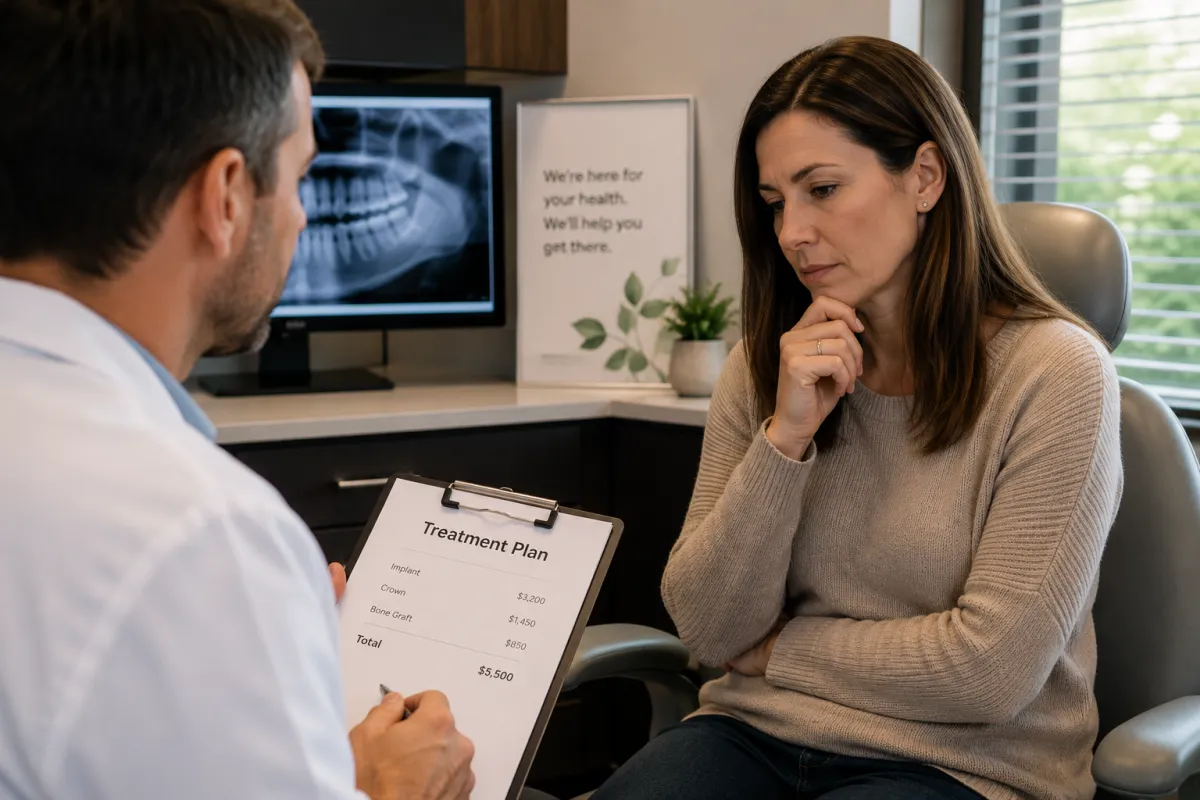
The Patient Said It Was Too Expensive. Was It?
“I’d love to do it...
It’s just more than I want to spend right now.”
Every dentist has heard some version of that.
And sometimes it’s absolutely true.
The fee really is the reason.
But I don’t think it’s the reason nearly as often as everyone assumes.
I remember talking with a dentist who was convinced patients in his area simply couldn’t afford larger cases.
He told me,
“Everybody wants to do the bare minimum.”
A few minutes later, we started talking about another practice less than fifteen minutes away.
They were doing implants. Cosmetic cases. Full-mouth rehab.
Same community.
Similar fees.
That got me thinking. If people in one practice can afford comprehensive treatment, why can’t they in another?
Money isn’t always the whole story.
Think about buying a house.
If someone walks into a beautiful home listed at $750,000 and immediately says,
“That’s too expensive.”
What do they really mean?
Sometimes they mean exactly that.
Other times they mean:
“I don't think it’s worth $750,000.”
Those are very different viewpoints.
Patients make the same calculations every day.
Not just in dentistry. With cars. Vacations. Home remodeling. Colleges.
Almost every significant purchase comes down to one question:
“Do I believe this is worth it?”
I’ve heard of patients spending $8,000 on cosmetic dentistry.
Then hesitating over a $900 crown.
Or how about the patient that says no to treatment then buys a new big truck a month later.
That doesn’t make them irrational.
It makes them human.
People spend money on things they want and feel confident about.
Confidence is built long before anyone talks about fees.
It starts with trust.
It grows when patients understand the problem.
It gets stronger when they believe the doctor truly has the right solution.
And it continues when everyone in the practice communicates that same confidence.
By the time treatment is presented, the financial decision is often already moving in one direction or the other.
One dentist I know changed nothing about his fees.
What he changed was how treatment was discussed.
The team slowed down.
Patients had more time to ask questions.
The doctor spent less time explaining procedures and more time explaining consequences.
The treatment coordinator stopped talking about insurance and finances first and started talking about outcomes first.
Case acceptance improved.
I also think we underestimate how often patients use price as the easiest way to end an uncomfortable conversation.
It’s easier to say,
“It’s more than I want to spend.”
than it is to say,
“I’m scared.”
“I’m skeptical.”
“II don’t really understand why I need this.”
“I need more time.”
Price becomes the explanation.
It isn’t always the obstacle.
This doesn’t mean fees don’t matter.
Of course they do.
Every practice has patients who simply can’t afford certain treatment.
But if every declined case is blamed on money, practices miss the opportunity to ask a better question.
What else could have influenced that decision?
I think that’s where growth often hides.
Not in lowering fees or discounting treatment or assuming patients won’t spend.
But in really understanding why they didn’t.
Because when a patient says,
“It’s too expensive.”
They may actually be saying something entirely different.
A Few Things Worth Thinking About
The next time a patient says treatment is too expensive, don’t stop at the fee. Ask yourself what else may have influenced the decision. The answer may change how your practice approaches case acceptance.
I've found that most growth problems aren't as obvious as they first appear. If you're curious what's really influencing patient decisions in your practice, let's have a conversation.
Schedule here.