The Problem With Asking, “How Did You Hear About Us?”
Almost every dental practice asks new patients:
“How did you hear about us?”
It sounds like a simple question.
The patient gives an answer. Someone enters it into the software. At the end of the month, the dentist gets a report showing where new patients came from.
Google: 12
Patient referrals: 9
Insurance: 7
Facebook: 2
The numbers look useful.
The problem is that patients rarely take one straight path to your practice.
A patient may hear your name from a coworker.
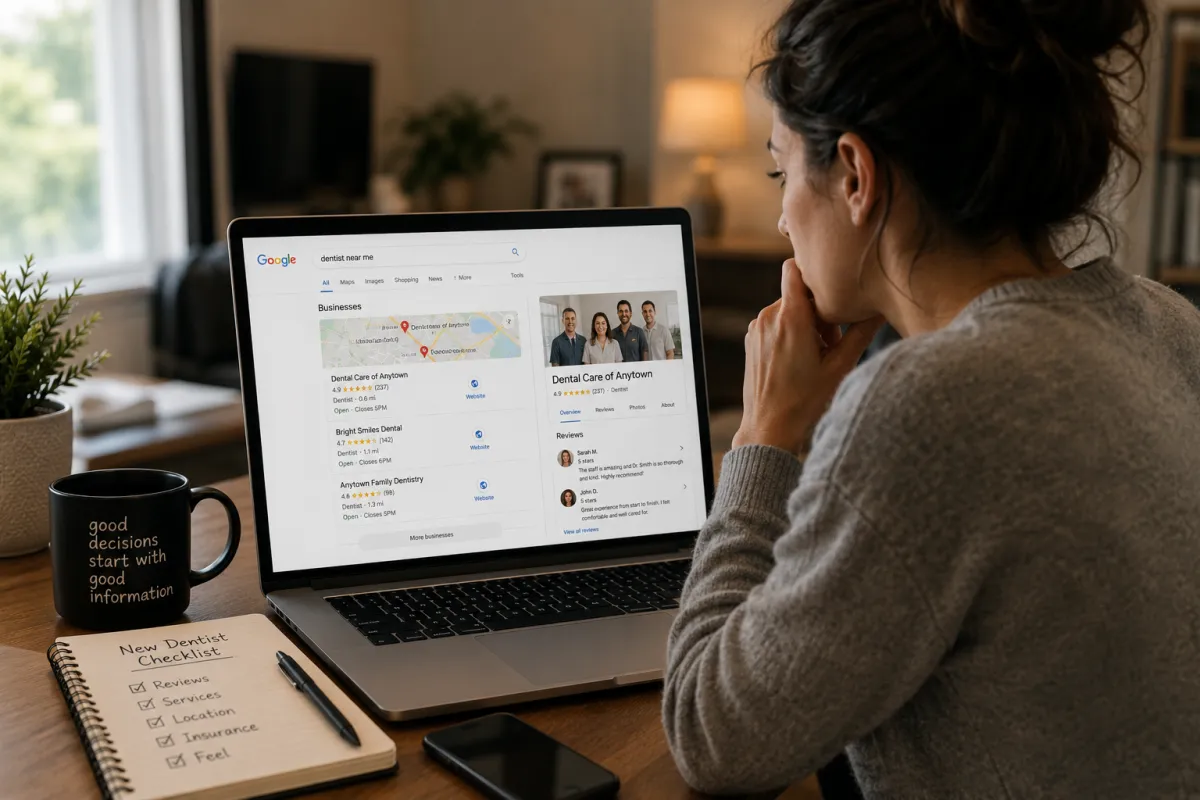
Later that evening, she searches for the practice on Google.
She reads several reviews.
She visits the website and looks at the doctor’s bio.
A few days later, she sees one of your posts on Facebook.
Two weeks after that, she finally calls.
At the front desk, someone asks:
“How did you hear about us?”
She says:
“Google.”
That answer goes into the report.
The coworker gets no credit.
The reviews get no credit.
The website gets no credit.
Facebook gets no credit.
Google gets all of it.
And six months later, someone looks at the report and says:
“Facebook isn’t bringing us any patients.”
Maybe it isn’t.
Or maybe the report was never capable of showing the whole story.
Patients Don’t Think About Marketing the Way We Do
Most patients aren’t keeping track of every place they encountered the practice.
They remember the last thing they did.
Or the easiest answer.
“I found you online.”
“My insurance company gave me your name.”
“I saw you on Google.”
“A friend told me about you.”
All of those answers may be true.
They may also be incomplete.
I’ve had dentists tell me that almost all of their new patients come from referrals.
Then we look at what happened after the referral.
The patient searched the doctor.
Read reviews.
Looked at photos.
Visited the website.
Compared the practice with two others.
The referral introduced the practice.
Everything the patient found afterward helped determine whether they called.
That matters.
Sometimes the Wrong Question Leads to the Wrong Decision
Let’s say a practice has been posting consistently on social media for a year.
Very few patients answer “Facebook” when asked how they heard about the office.
The dentist decides social media isn’t working and stops.
A few months later, the practice feels less visible.
Patients mention seeing competitors more often.
The office feels less visibile online.
The original report wasn’t necessarily wrong.
It just measured the final answer instead of the full influence.
The same thing happens with websites.
A dentist may say:
“Our website doesn’t bring in many patients.”
Yet nearly every referred patient visits it before calling.
The website may not have introduced the practice.
It still helped the patient decide whether the referral felt credible.
That is a very different role, and the standard question rarely captures it.
This Also Works in the Other Direction
Marketing sometimes gets credit it didn’t earn.
A patient clicks a Google ad and schedules.
The report credits the ad.
But the patient had already known the dentist for years.
Her neighbor was a patient.
She had read the practice’s reviews before.
The ad happened to be the easiest way to find the phone number.
Did the ad create the patient?
Or did it simply make the final connection?
That distinction matters when you’re deciding where to spend money.
So What Should You Ask?
I wouldn’t stop asking, “How did you hear about us?”
I would add one more question:
“What made you decide to choose us?”
That answer is often much more useful.
You may hear:
“My sister loves your office.”
“Your reviews made me feel comfortable.”
“I liked what the doctor said on the website.”
“You seemed experienced with implants.”
“The office looked welcoming.”
“I kept seeing your posts.”
Now you’re learning what influenced the decision instead of only where the patient remembers finding your name.
You can also ask:
“Did you look at anything online before calling?”
That question may tell you more about the patient’s decision than the original source question ever did.
Look at the Whole Path
Marketing rarely works one source at a time anymore.
A referral may lead to Google.
Google may lead to reviews.
Reviews may lead to the website.
The website may lead to social media.
Then the patient calls.
Every part helped move the patient closer to a decision.
When practices give all the credit to one source, they risk cutting something that was silently helping another part work.
The answer in your new-patient report may be accurate.
It may also be only the last step in a much longer story.
Before making marketing decisions based on “How did you hear about us?” ask whether you’re measuring where patients found you—or why they chose you.
Marketing is layered and multi-faceted and easily hidden and overlooked.
Schedule a quiet conversation here.